


Agenda
PRELIMINARY PROGRAM
- September 23, 2026 | Registration of participants - Welcome event
- September 24, 2026 | Registration of participants - Keynote lectures - Technical Sessions - Gala dinner
- September 25, 2026 | Registration of participants - Keynote lectures - Technical Sessions - Social event
KEY CONFERENCE TOPICS & THEMATIC UNITS
The International Probabilistic Workshop (IPW) series is a platform where experts and practitioners come together to explore the role of uncertainty in engineering problems. At its core, the workshop delves into the application of probability methods to tackle real-world challenges in design, assessment, and system management. From evaluating structural reliability and safety to developing risk management strategies, the IPW emphasizes the importance of rationally integrating uncertainty into engineering.
Through engaging discussions and presentations, participants address research topics like structural safety and reliability, uncertainty modelling and quantification, prediction and preparedness for climate threats and extreme events, robustness and resilience of buildings and infrastructure, design, construction and maintenance decision making, risk management and insurability, digital tools in risk identification, assessment and mitigation, artificial Intelligence for simulation, analytics and decision support. Case studies and interdisciplinary collaborations will further enrich the program, showcasing how these methods are applied across civil, mechanical, and environmental domains for enhanced management and more sustainable practices.
In addition to its general themes, the IPW 2026 will focus on key topics structured around the following axes, aiming to foster contrasts that promote scientific dialogue and collaboration:
• Probabilistic risk assessment in infrastructure planning
• Resilience-based design of critical infrastructure
• Uncertainty quantification in structural health monitoring
• Machine learning applications in probabilistic structural analysis
• Climate change impacts on infrastructure reliability
• Multi-hazard probabilistic assessment for complex systems
KEYNOTE LECTURES
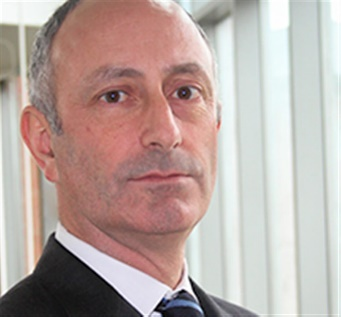
Prof. Paolo Gardoni, UNIVERSITY OF ILLINOIS AT URBANA CHAMPAIGN
Title: An Overview of Regional Risk Analysis: Modeling Hazards and Predicting Impacts
Abstract: Civil structures and infrastructure provide vital services that support and enable societal functions. Ensuring their reliability and prompt recovery is critical for the public’s well-being and economic prosperity. However, the consequences of past disasters worldwide have raised concerns about the vulnerability of civil structures and infrastructure, highlighting the importance of risk mitigation and management. The maintenance, repair, and replacement of existing vulnerable, deficient, and deteriorating structures and infrastructure represent a significant investment. To allocate limited funding effectively, decision-makers must use advanced risk analysis tools. This presentation introduces a comprehensive formulation for regional risk analysis, including resilience analysis. The presentation considers multiple hazards, different infrastructure, and the effects of deterioration and interdependencies among infrastructure. The presentation also shows how physical damage to structures and infrastructure can be cascaded to predict the likelihood and duration of business interruption. The presentation includes examples of regional risk analysis, considering a hypothetical earthquake in the New Madrid Seismic Zone in the USA.
Short bio: Prof. Paolo Gardoni holds the Alfredo H. Ang Family Endowed Chair at the University of Illinois Urbana-Champaign. He's a professor in multiple departments, including Civil and Environmental Engineering, Industrial and Enterprise Systems Engineering, and Biomedical and Translational Sciences. Gardoni has several international courtesy appointments at prestigious institutions worldwide. As Director of the MAE Center, he focuses on multi-hazard engineering approaches. He has served as Editor-in-Chief for two international journals and currently sits on editorial boards of 12 journals. Gardoni is involved in numerous national and international committees focused on risk, reliability, and resilience analysis. His impressive publication record includes 11 books, over 270 refereed journal papers, and 29 book chapters. He has delivered more than 90 invited lectures and secured over $58 million in research funding. His work spans areas such as reliability analysis, sustainable infrastructure, decision-making under uncertainty, and natural hazard mitigation. In 2021, Gardoni received the prestigious Alfredo Ang Award from the American Society of Civil Engineers for his contributions to risk analysis and management. He has mentored 29 PhD students and 35 Master's students, with many now holding faculty positions globally.

Prof. Bruno Sudret, EIDGENOSSISCHE TECHNISCHE HOCHSCHULE (ETH) ZURICH
Title: Active learning methods for structural reliability analysis of deterministic and stochastic systems
Abstract: Structural reliability analysis aims at quantifying the probability of failure of engineering systems under uncertainty, often relying on computational models whose evaluation may be prohibitively expensive. Over the past decade, surrogate-based approaches, which combine metamodels with adaptive sampling strategies, have emerged as an efficient alternative to classical simulation methods. In particular, active learning techniques iteratively enrich the experimental design by targeting the most informative regions of the input space, typically in the vicinity of the limit-state surface. This keynote first presents a unified perspective on active learning methods for reliability analysis of deterministic systems. We show how most existing approaches can be interpreted within a common framework involving a surrogate model, a reliability estimation strategy, a learning function, and a stopping criterion. Insights from a large-scale benchmark study provide guidance on the performance, robustness, and generalization capabilities of different strategies, and lead to practical recommendations for their use in both component and system reliability problems [1]. The second part of the talk extends this perspective to stochastic simulators, whose outputs exhibit intrinsic variability even for fixed inputs. In this setting, classical formulations and methods become inadequate. We introduce stochastic emulators, with a focus on stochastic polynomial chaos expansions, which explicitly separate parametric uncertainty from intrinsic randomness [2]. Building on this representation, we develop an active learning strategy that rely on ensembles of surrogate models to quantify epistemic uncertainty and to identify regions that are simultaneously close to failure and sensitive to stochastic variability [3]. The resulting framework enables a principled and computationally efficient treatment of reliability problems for both deterministic and stochastic systems. Applications to benchmark problems and realistic engineering case studies illustrate its potential for scalable uncertainty quantification in increasingly complex modeling environments.
Short bio: Bruno Sudret is a professor of Risk, Safety and Uncertainty Quantification at ETH Zurich since 2012. His expertise lies in computational methods for uncertainty quantification, reliability and sensitivity analysis, Bayesian approaches, and reliability-based design optimization. Sudret's educational background includes a master's from Ecole Polytechnique (France, 1993), and a master's and Ph.D. in civil engineering from Ecole Nationale des Ponts et Chaussées (France, 1996 and 1999). His professional journey in probabilistic engineering mechanics and uncertainty quantification began in 2000 as a post-doctoral fellow at UC Berkeley. He then worked at EDF R&D (2001-2008), heading a group specialized in probabilistic engineering mechanics. From 2008 to 2011, he served as Director of Research and Strategy at Phimeca Engineering in France. Sudret has authored over 350 publications in journals and conference proceedings. He serves on the editorial boards of several prestigious journals in his field. He is committed to disseminating uncertainty quantification techniques through the development of UQLab software and the UQWorld community platform. His work significantly contributes to advancing the field of uncertainty quantification in engineering systems, combining academic research with practical applications.

Prof. Alan O'Connor, TRINITY COLLEGE DUBLIN
Title: Probabilistic Analysis and Reliability-Based Assessment of Existing Bridges
Abstract: This lecture will address the probabilistic analysis of bridges from the perspective of assessing safety from first principles, with particular emphasis on how reliability-based methods can support more rational decisions for existing structures. It will outline the framework of prEN 1990 Part 2 for the reliability based assessment of existing structures and relate this to practical owner-led implementation, drawing also on the Danish Roads Directorate’s 2024 guideline for reliability-based assessment of existing bridges as an important benchmark. The lecture will examine the probabilistic modelling of resistance, loads, model uncertainty and failure modes, including both normal traffic actions and abnormal/heavy vehicle loading. It will further address how supplementary information including inspection findings, testing, proof loading and structural health monitoring can be used to update reliability estimates and reduce uncertainty. Through practical examples, the lecture will show how probabilistic methods can improve consistency, transparency and engineering judgement in load carrying capacity assessment, life extension and bridge management.
Short bio: Prof. Alan O'Connor is Chair of Structural Engineering in the Dept. of Civil, Structural and Environmental Engineering at Trinity College Dublin, Ireland. He is a Fellow of that institution (FTCD). He is also a Chartered Engineer (CEng) and Fellow of the Institution of Engineers of Ireland (FIEI). He is the Head of School of Engineering. He has extensive national/international experience in risk and resilience analysis of critical infrastructure, asset lifecycle performance optimisation, code development/calibration and in probabilistic safety assessment. He has advised agencies such as: Irish Rail, Transport Infrastructure Ireland, The Danish Roads Directorate; Danish Railways; Swedish Railways; The Norwegian Roads Authority, The Dutch Ministry of Transport, Public Works and Water Management and the World Bank. At Trinity College Dublin, the research group which he leads are focused on investigating: infrastructural asset management and probabilistic safety assessment, risk and resilience analysis of critical infrastructure elements and systems, statistical load modelling, structural health monitoring, stochastic modelling of engineering systems, engineering for extremes and structural reliability analysis. He has authored over 350 academic papers in these areas. He has delivered Keynote Addresses at international conferences in Europe, the United States and Australia.

Prof. Jochen Kohler, NORVEGIAN UNIVERSITY OF SCIENCE AND TECHNOLOGY (NTNU)
Title: Representation of snow load for the purpose of structural design
Abstract: The representation of snow load in structural design codes balances three competing demands: it must reflect the actual hazard at the site, support a target reliability that is uniform across the building stock, and remain operationally simple for code users. How s_k is derived — from station extremes interpolated to a zonal map, from gridded reanalysis or climate-model output, from a hybrid of the two, or from local measurement — is itself a modelling choice, and each choice carries a different uncertainty structure that propagates differently into the design value.
This contribution revisits snow load representation from a structural-reliability perspective. We distinguish the aleatory variability of the annual snow load from the epistemic uncertainty introduced by the chosen representation, and show how each source enters the partial-factor format E_d = γ_Q · s_k. A general framework is proposed in which spatial and methodological uncertainty are made explicit, separated, and propagated into an adjusted characteristic value, leaving the partial factor to carry only the residual aleatory contribution. The framework is agnostic to the input: station-based zonal maps, gridded SWE simulations, and hybrid products can all be accommodated, and the conse quences of each choice for the reliability index β across a region become directly comparable.
The approach is illustrated for Norway, where gridded SWE simulations and snow-course observations are combined to produce an error-adjusted s_k map and to evaluate the spatial uniformity of β before and after correction. The discussion turns to what this means for code calibration, for the integration of climate projections, and for the harmonisation of snow-load mapping across jurisdictions with very different observation networks.
Short bio: Professor Jochen Köhler has been a professor at the Institute for Structural Engineering since 2016, with a research focus on structural reliability and engineering decision-making under uncertainty. His work addresses some of the most pressing challenges in civil engineering, seeking to enhance the safety, efficiency, and sustainability of the built environment. Professor Köhler is President of the Joint Committee on Structural Safety (JCSS), an internationally recognized expert committee operating under the auspices of professional organizations such as IABSE, fib, RILEM, ECCS, IAAS, and CIB. In this role, he leads global initiatives that advance probabilistic approaches to structural safety and promote harmonized standards for engineering practices. He is also an active member of national and international standardization committees and serves as a board member of the Building Sector of Standards Norway, contributing to the development of structural codes and guidelines. Professor Köhler’s contributions extend beyond academia to practical implementation, influencing engineering practices, public safety, and the advancement of international engineering standards. His leadership and expertise make him a key figure in shaping the future of structural engineering.

Prof. Ruben Van Coile, GHENT UNIVERSITY
Title: From standardised to Adaptive Fire Testing: quantifying the expected utility of fire tests before test execution
Abstract: Current Fire Safety Science and Engineering (FSSE) is heavily dependent on standardized tests that were not designed to characterize 21st-century construction products. These tests do not provide a comprehensive understanding of construction products' true fire performance, and do not provide the necessary inputs required for performance-based fire engineering analysis. This is a fundamental obstacle on the road towards rational and risk-based fire design of buildings. The proposed way forward is a shift towards “Adaptive Fire Testing”, whereby test specifications are adapted to the assessment goal and the current state of knowledge. Central to the Adaptive Fire Testing framework is the concept of Value of Information whereby the expected utility of a proposed fire test is evaluated prior to the test execution through pre-posterior Bayesian analysis. Such evaluation allows ranking test alternatives in terms of their net expected benefit. In this presentation, the Adaptive Fire Testing framework is introduced in detail and demonstrated through a case study. The case study illustrates how Adaptive Fire Testing provides a systematic, knowledge-driven approach to the design of fire experiments and allows to explicitly link laboratory-scale measurements to system-level risk metrics.
Short bio: Dr. Ruben Van Coile is Associate Professor at Ghent University, Belgium, where he founded the structural fire engineering team (SFE@UGent). His research focusses on the application of risk and reliability methods to structural fire engineering. At Ghent University, Ruben teaches Fire Safety Strategy, Risk Management and Applications of Structural Fire Engineering to the MSc in Fire Safety Engineering students. He currently leads the ERC project AFireTest which aims to develop knowledge-based fire testing approaches.